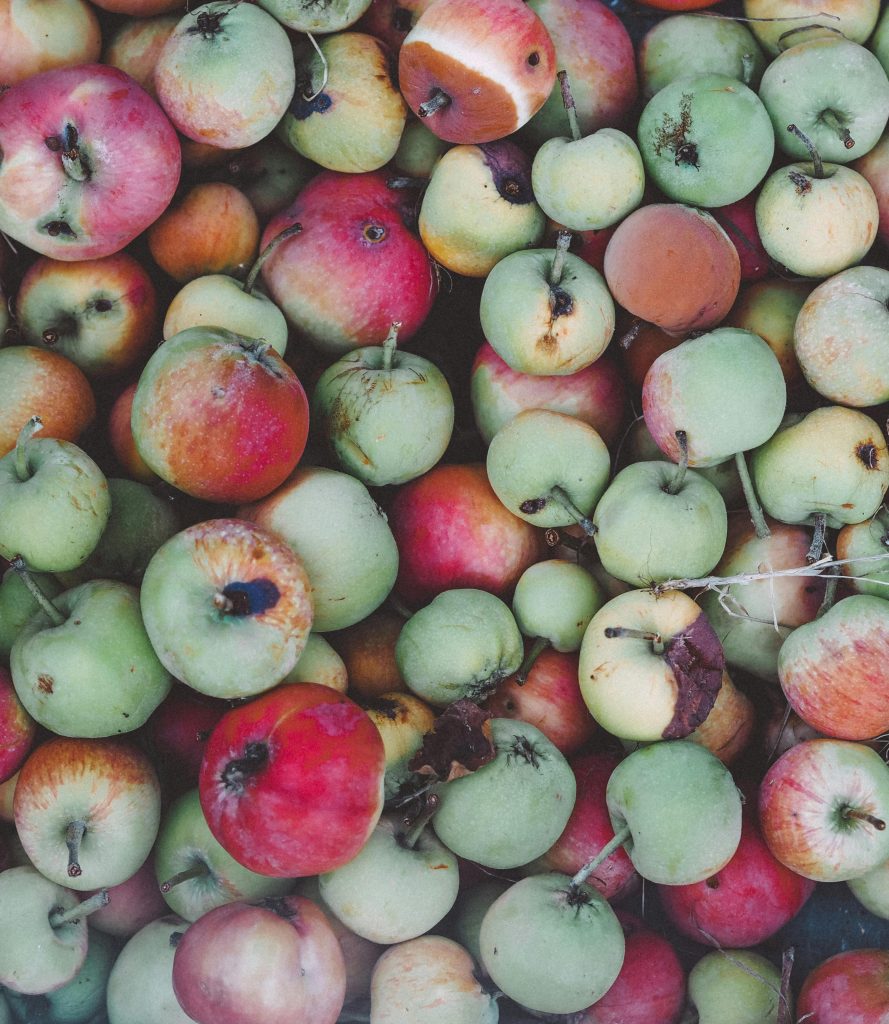
Apple orchard waste improves soil health and reduces organic waste.
Composting transforms fallen apples, pruning clippings, and leaf litter into nutrient-rich humus. This prevents methane emissions and reduces dependence on synthetic fertilizers.
What Waste from Apple Orchards Can Be Composted?
Use garden bags to collect and sort:
- Fallen apples (exclude moldy or diseased ones)
- Leaf litter from late-season shedding
- Small pruning branches under 2 cm diameter
- Apple peels and cores from harvest sorting
- Grass and cover crop clippings around orchard trees
Avoid these materials:
- Diseased wood or fruit (can spread pathogens)
- Plastic labels or netting
- Excessively large branches
How to Prepare Apple Waste for Composting
Preparation increases microbial efficiency. Shredded or chopped materials decompose faster.
| Waste Type | Prep Method | Reason |
| Fallen apples | Halve or crush | Increases surface area |
| Pruning waste | Chip or cut to 2–5 cm | Promotes breakdown |
| Leaf litter | Bag and lightly moisten | Accelerates microbial action |
| Mixed waste | Balance C:N ratio (30:1) | Ideal microbial growth |
How Do Garden Bags Help Compost Apple Waste?
Garden bags streamline collection, sorting, and transport.
Reusable garden bags hold between 80 to 200 liters of green waste. Their breathable fabric supports aeration, which enhances decomposition when used for temporary storage.
Key Benefits:
- Reduce manual labor: Collect pruning and apples in fewer trips
- Promote aeration: Breathable sides limit anaerobic buildup
- Enable sorting: Separate fruit, wood, and leaves before composting
- Support hygiene: Keep decaying matter off the orchard floor
Best Types of Bags to Use:
| Feature | Composting Benefit |
| Breathable mesh | Allows airflow for decay |
| Reinforced handles | Easier orchard transport |
| UV-resistant material | Withstands outdoor storage |
| Foldable design | Saves space post-use |
You can find recommended compost bags here.
What’s the Composting Process with Apple Orchard Waste?
Use the garden bags for initial collection, then follow the composting steps:
- Sort green (fruit, leaves) and brown (branches, stalks) waste
- Layer green and brown materials in a 3:1 brown-to-green ratio
- Add moisture until it feels like a wrung-out sponge
- Turn the pile every 10–14 days to boost oxygen
- Monitor temperature: Ideal range is 55–65°C for fast decomposition
- Cure compost for 30 days once the pile cools below 30°C
Compost Timeline
| Phase | Duration | Notes |
| Active Phase | 2–6 weeks | High heat; microbial peak |
| Turning Phase | Weekly | Speeds decomposition |
| Curing Phase | 3–5 weeks | Compost matures; pathogen die-off |
How to Use Finished Compost in the Orchard?
Apply compost around tree bases, in planting beds, and over mulch.
Use garden bags to carry cured compost back to the orchard:
- Spread 5–8 cm layer around root zones
- Mix into top 10–15 cm of soil for new plantings
- Use as a mulch top-up during spring or fall maintenance
How to Prevent Pests When Composting Apple Waste?
Bagging apple waste early prevents insect infestations and mold.
Decaying fruit attracts wasps, fruit flies, and rodents. Use sealed garden bags to temporarily isolate high-sugar waste like apples.
Pest Prevention Tips:
- Empty fruit bags within 24–48 hours
- Rinse bags between uses to remove residues
- Add sawdust or dry leaves to reduce fermentation odor
- Keep compost bins at least 15 meters from trees
Explore our guide on pest control in orchards for additional protection.
When Is the Best Time to Compost Apple Orchard Waste?
Start composting right after the harvest or pruning season.
Late summer and early fall provide warm temperatures that help compost break down faster.
| Activity | Ideal Compost Start Time |
| Apple harvest | August–October |
| Tree pruning | February–April |
| Leaf cleanup | November–December |
Garden bags allow orchard owners to start composting in stages and store separated waste safely before composting.
What Tools Help Orchard Owners Compost More Efficiently?
Use tools that speed up waste collection and compost maintenance:
- Garden bags: For mobility and sorting
- Compost thermometer: To monitor heat levels
- Shredder: To reduce branch volume
- Pitchfork: For pile turning
- Moisture meter: To avoid overwatering
See our full list of orchard composting tools.